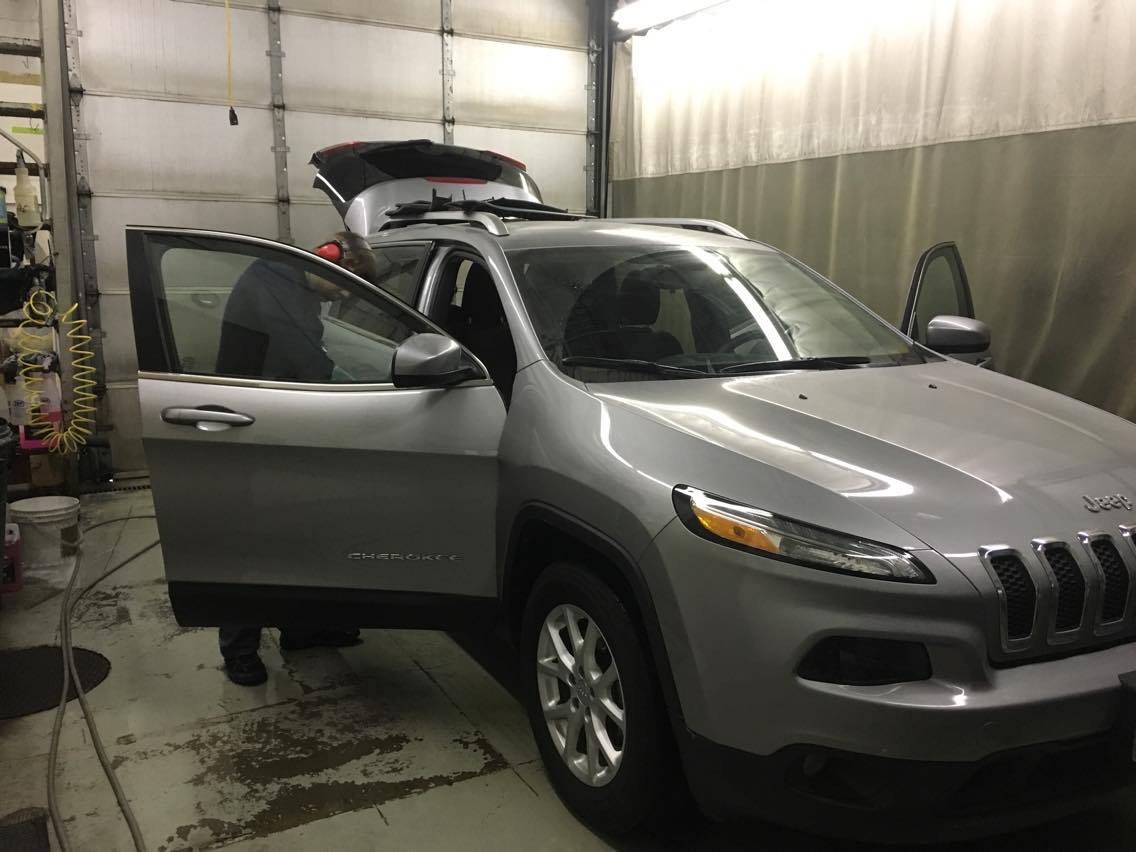
Winter driving isn’t much fun, unless you’re in an empty parking lot whipping donuts out, right? Nobody likes waking up in the morning and getting stuck on the side of the road because your commute is featuring the inch thick ice you were dreading the night before. Winter is a risky time of the year in general, but the risk only gets worse when you’re driving around with a foot of snow on the roof of your car.
Driving with snow piled on top of your car is dangerous for many reasons, the first being it could fall within your line of visibility. Snow melts as your vehicle heats up, but it also could slowly slide down the front of your vehicle, or could abruptly shift and block your sight when driving. This is an issue for obvious reasons. Windshield wipers are great, but they’re made for rain. The best practice is to eliminate the snow from your roof, windows and mirrors before you drive anywhere.
As snow melts and refreezes on the roof of your vehicle, it creates small pieces of ice, that accumulate and become larger hunks. Imagine driving down the highway and having a missile launch from the vehicle in front of you. This can cause cosmetic damage to the vehicle behind you, or could potentially cause an accident to the unsuspecting driver. Even if your ice chunk doesn’t hit another vehicle, it could cause road obstruction which is just as dangerous. We’ve all seen sheets of snow fall off of a semi as they haul their loads down the freeway, so next time you leave, think about clearing off as much as you can to save your fellow commuters.
In the state of Minnesota, it is not illegal to drive with snow piled upon your vehicle. You could, however, be pulled over for driving with an obstructed view. You may also be held liable if for any damage caused by snow falling off of your vehicle onto one behind you, as it violates the Unsecured Load Law in Minnesota. State Patrol advises drivers that if their vehicles are damaged due to ice or snow falling off of a vehicle in front of you to attempt to capture the license plate and contact the police department to seek reparations for the damages. You as a driver should be responsible and remove the snow from your vehicle prior to utilizing your vehicle after a snowfall.
When in doubt, clean that snow off! Nobody wants to be stuck in the cold taking care of this annoying task, but the reality is that you are doing your due diligence as a licensed driver by ensuring you are operating your vehicle safely. Using a soft bristle snow brush should get the job done, and allowing your vehicle to heat up will warm the ice and snow on top of your vehicle, allowing it to slough off with your brush easily. Give yourself the extra five minutes in the morning, save yourself the fine, and potentially save somebody else's life.
Showing posts with label car accident. Show all posts
Monday, February 17, 2020
Monday, January 20, 2020
It's Not Like The Old Days
Today in auto body, we are faced with more electronics and fluff than ever. Technology advancements have created safer modes of transportation, often edging into luxurious high-tech heaps of steel. This shows no signs of stopping, which has created a huge onslaught of misconceptions when it comes to a “typical bumper job.” There are no typical jobs anymore. Gone are the days of a one day turn around, dropping your car off in the morning for a little repair and picking it up that afternoon is no longer feasible.
Due to the intelligence we are faced with each passing year, we are required to update our repair process. The downside this has for our customers is that the length of repairs for even the smallest jobs has increased. After initial drop off, we need to perform a full disassembly of the vehicle. We remove all parts from the affected area, which often requires us to unplug sensors and other electronics. After the tear down is complete, we can create a complete blueprint of the damage to your vehicle and have a full assessment ready for you or your insurance. This process alone can take hours and is all dependent on the extent of the damage and the complexity of the systems in play.
Once we have your approval to begin repairs, we will assess mechanical requirements of the vehicle. This is when we note any sensors, cameras or other electronics that may require recalibration before being roadworthy. When we’ve established any items required, we get to the meat of the repair, the body work. We get the parts painted, straighten any frame damage and anything else required to get your vehicle back in shape.
When our technicians have completed the repair of parts, and all parts are painted, they reassemble the vehicle. We then put our information gathered during the blueprint for mechanical work to the test. We recalibrate any cameras, sensors, or other systems in the vehicle and scan for any possible code errors. This will tell us if any of the damage to your vehicle is still hiding within the electronic systems of your vehicle, which allows things like your airbags to deploy at the proper time. A step as important as this cannot be overlooked, and we attempt to do it in a quick efficient manner. Sometimes, computers get the best of us, too.
Our last step to a repair is to quality check your vehicle. We have staff check all aspects, things like the paint match, headlights, blinkers and windows are looked over now to ensure they’re in proper working condition. With each vehicle that comes through our doors, we take our time to ensure that all manufactured requirements are met. This means that we are combing over our work, the electric systems, paint match and so much more.
Our goal, as always, is to make sure your vehicle gets returned to you in the condition it was prior to your accident. Sometimes that requires us to take our time and can result in longer than anticipated repair times. We aim to make sure you are safe, and happy. Let us know if you have any questions about the repair process, or any time stipulations you may have, we do our best to accommodate all our customers!
Friday, August 23, 2019
What Is PDR?
Fall is a wonderful time of the year, full of pretty colors,
cooler temps, and lots of hail. Hail season lasts into the winter and gets us
ready for our busy season. That being said, hail season can often be just as
busy as the winter season, but offers an unpredictable flare to the year. When
hail storms hit, all kinds of storm chasers come up from the south and set up
shop in the cities. Those storm chasers perform a special kind of auto body
repair called PDR, or paintless dent repair. Paintless dent repair is exactly
as it sounds, these technicians, and some of our own, remove the dents in your
vehicle without painting it. Sounds crazy, we know.
PDR is a lot simpler than you’d imagine. Picture big bright
lights, a disassembled vehicle, and little (sometimes large!) rubber mallets.
Your PDR technician is actually using pressure from inside the panels of your
vehicle to slowly pound them out, reforming the metal to its original shape.
The transformation is incredible to watch, and we highly recommend checking
YouTube for a severe hail repair! The reason you can perform PDR in hail dents
is because the hail pieces leave ridgeless dents in the panels of your vehicle.
Dents from things like backing into a pole or getting rear ended aren’t
typically candidates for PDR as the paint has been pushed to the point of
breaking. However, we can occasionally fix a dent via PDR even if it has a
ridge, as long as the paint has not cracked at all! The beauty of having an
auto body shop look over your vehicle and repair it is that we can work
directly with your insurance on the damage caused by the storm!
We understand though, you may not have full coverage on your
vehicle, may not have the time to drop off the vehicle, or you may just want to
experiment yourself! There are certain things you can do at home to attempt to
repair hail damage. Heat is one way to get the metal panels on your vehicle to
flex and return to its preformed shape. By parking your vehicle in the sun,
sometimes certain dents can pop out themselves. We’ve heard of people trying
hot water methods and using their hair dryers as well. These are all great DIY
techniques if you don’t mind some paint discoloration. The other option here
would be to chill the dents, some people have been said to use dry ice. They
circle the dent with a piece of dry ice, attempting to coax the dent out of the
metal. All these techniques have seen varied results, and we do not recommend
attempting to repair your vehicle untrained at home, unless you’re not worried
about how the vehicle looks afterwards. Attempts to repair the vehicle yourself
could result in voiding your warranty, or loss of insurance coverage for the hailstorm.
Naturally, we suggest bringing your vehicle into your local
body shop, which is hopefully ours! There is no way to guarantee that these
home remedies will work for your vehicle, and we always have time to help!
Whether you’re just coming in for an estimate, or coming in for repairs, we are
here to try and solve your problems as best we can.
Tuesday, July 9, 2019
In A Collision? What Are Your Rights?
We’ve said it before, and we’ll say
it again, we are not your favorite group of people to see. We get it, who likes
getting in an auto accident? Nobody comes to Oakdale Collision, throws open the
doors and exclaims how excited they are about getting their car repaired. This
is an inconvenience to you, your family, and your wallet. We want to make sure
that before, during, and after this confusing time you know your rights as a
consumer.
You
have the right to pick where your car is repaired. This one baffles some
people, because your insurance sometimes seems to omit this detail. Your
insurance company has direct repair facilities it prefers to work with out of
ease and contractual agreements holding the shop to certain rates.
Occasionally, they will make recommendations to their clients where they should
take their vehicles. This by no means requires you to use said body shop,
however. You still have the option to get your vehicle repaired at whichever
shop you prefer, regardless of where your insurance mentions.
You
have the right to pick what kind of parts are used on your vehicle. This
one can be a bit less clear, but you have a say in what kind of parts are put
on your vehicle. There are typically three types of repair parts we could use;
OEM, Non-OEM, or recycled parts. An OEM part is an “Original Equipment
Manufacturer” part, meaning it was made by the manufacturer. A Non-OEM part is
any part considered aftermarket, or made by someone other than the
manufacturer, and a recycled part is exactly what the name suggests, recycled.
Some insurance companies have you waive this right when you sign their policy
statements, but for the most part you have the right to choose which type of
part goes on your vehicle.
You
have the right to a safely repaired vehicle. You can ask us any time about
our processes, what we are certified in, and how we fix your vehicle. After the
vehicle is finished, we will present you with an itemized copy of everything we
did to your car. Our goal is always return your vehicle back to pre-accident
condition, and that includes it being a safe vehicle to operate.
Our
goal at Oakdale Collision is to build a relationship with our customers based
on trust, and assurance that we are the very best at what we do. We know it’s
true, and hope that one day you can see it too! If you need an estimate, need a
repair, or just have some questions about what you should know as a customer,
call us today! We’d be happy to help.
Tuesday, June 25, 2019
Dangers in Summer Driving
Summer is an exciting time of year. The sun is out, the
cabin is open for the season, and hopefully the boat is out on the water.
There’s a whole bustle of activity out there, and that’s not always a good
thing. Everyone wants to be outside, which means there’s a much larger
population of drivers on the road. That being said, it makes sense that summer
is the most common time of the year for traffic accidents to occur.
In the summer, we often see accidents due to construction
zones. Especially in Minnesota, which should be renamed the Land of 10,000
Construction Projects, we spend most of our spring and summer avoiding
construction. Presently, most of the metro is under construction. Before you
take any trips, or have to drive somewhere unfamiliar, look up what
construction is between you and your destination, and do your best to avoid it.
Torn up concrete and debris can wreak havoc on your vehicle. Expensive havoc.
It’s in our best interests to remain vigilant while driving
and pay attention to the road, which brings me to our next biggest cause of
accidents; Distracted Driving. Set the right example for your family and keep
your phone put away while you’re driving. Pay attention to the road, and make
sure that whoever is in the car with you understands how seriously you take the
safety of yourself, and theirs. In the world of apps and fancy smartphones,
it’s almost inexcusable to be on your phone while driving. Applications now
have safety features that include “drive mode” as well as most Apple updates for
iPhones.
Another thing to be conscious of as this summer heats up, is
the condition of your tires. Tire blowouts are another one of the most common
accidents we see in the summer. As the temperatures rise, bald tires are
affected and their chances of blowing out under stress is much higher. This can
cause damage to your vehicle, and others if uncareful.
July and August hold the highest accident rate in our
country, August taking the cake. Auto accidents kill more than 40,000 people in
the United States a year! It is the leading cause of death in people under the
age of 34. Every time you get into your vehicle, you’re risking your life, and
the lives of those around you. We hope that you do so in the most informed
manner possible. Accidents happen, and we are always here to assist you with
any vehicle repairs or questions you may have.
Tuesday, May 21, 2019
Does It Really Take That Long?
It used to be that we drove around in giant metal machines,
operating purely on fuel and combustion. Things always change, and in today’s
world you’re driving around in a high-tech computer. People still view their
vehicles as a machine, but a car hasn’t been “just a machine” for the last
fifty years! In 1968 Volkswagen introduced the first computer controlled
function in a vehicle; the electronic fuel injector. This advancement in the
car industry was huge! The ECU is now a standard seen in all vehicles, emerging
in the 1960’s and still used today. By 1986 we had our first auto-driven cars,
in 2017 Tesla introduced self driving semi-trucks, and today we’re looking at
vehicles that are almost completely self-sufficient.
This
loose timeline is just that, very loose. Imagine all the advancements between
the 60’s and today. Now imagine the advancements technicians have seen, working
on these vehicles day in and day out. The industry now requires certified
technicians, who have undergone training through each manufacturer in order to
understand the innermost workings of these computers and the machine
themselves. This is all great, because we want our technicians to be the best
at what they do. When you put it all together though, what does that mean for
you, the customer?
Time. The biggest thing all these computers have changed during our repair process is time. We no longer have the ability to do one day bumper jobs, because that Audi A6 you drive has three sensors in the front bumper that allow you to feel a little bit safer in your car, but also require us to calibrate them if we remove or have to adjust the bumper. Every vehicle newer than 2008 is equipped with sensors in the passenger seat that signal occupancy and when to deploy airbags in the event of a crash, and has to be reset each time you’re in any minor collision. These sensors are a wonderful safety feature, but in that effort to ensure safety we’re also looking at additional time in a simple repair.
We do
our best to get your vehicles returned to pre-accident condition as soon as we
can, but we also want your vehicle to be safe, efficient, and in proper working
order before we return the vehicle to you. So when you get frustrated at how
long your repairs are taking, consider the type of vehicle you drive, and the
computer systems you use each day. The more complicated and high tech your
vehicle is, the longer the repairs will take. So, yes, it does take that long,
but rest assured that we are doing everything in our power to get your vehicle
repaired and back to you safe and sound.
Tuesday, April 23, 2019
Negotiating A Total Loss With Insurance
We can’t always help what situations we end up in, no matter
how hard we try. Sometimes, we forget to brush our teeth. Sometimes, we get
into a car accident and our vehicle isn’t repairable. If your vehicle is one of
the unfortunate ones that does total out, there are steps you can take to
ensure you’re getting the best settlement possible. When a vehicle totals out,
it’s actually declared a total by your insurance company. A body shop like ours
can’t deem a vehicle repairable or totaled, it can only do what the insurance
company declares. In the state of Minnesota, a vehicle is declared a total loss
once it reaches 80% of reparability. Once your vehicle has exhausted 80% of
reparability, your insurance will declare it a total loss and will reach out
to you to settle. The thing that most people don’t know here, is that this
settlement is negotiable.
If your insurance values your vehicle at something lower
than you feel is fair, you can challenge them. You have the right to seek your
own appraisal of your vehicle, and should do so. This is the best way to know
for sure if you’re receiving a fair value. Anything challenged with your
insurance will need concrete proof, so make sure you document any and all
upgrade receipts or appraisals you receive that could help your case.
Another thing you should know is that your insurance
includes licensing fees in your settlement. Think about this for a second. When
you go out and purchase a new vehicle, you have to pay to license it. So, if
your vehicle is worth $5,000, and they give you a check for $5,000, you’re
actually being shorted the licensing fees to purchase a replacement vehicle
valued at $5000. There are numerous things you should be aware of, but this one
is often overlooked by consumers.
Customers of larger insurance carriers like State Farm and
Farmers need to be aware of the little things that are wrapped into the total
loss of a vehicle. Your insurance carrier doesn’t mean anything personal by
this, but they do cut corners to save themselves money. The relationship you
have with your agent doesn’t transfer over to the claims department. Their goal
is to resolve as many claims and total losses as possible, for the least cost
to the insurance. If they save $100 on your claim, and save that same $100 on
100 other claims, they’re saving their employer $1000.
A car accident is a headache for anybody involved. It’s an
unpleasant, high stress and oftentimes takes a physical toll. You do your best
to keep a good standing relationship with your insurance, take care of your
vehicle, and to drive safely, but let’s face it; accidents happen. Sometimes a
vehicle is repairable, sometimes it’s not. The moral here you need to take
away, as with anything, is to know what your vehicle is worth. If you know the
value of your car, you should have no problems negotiating with your insurance.
Wednesday, February 20, 2019
Cars Aren't For Transportation
The autobody world is in constant fluctuation, due to the
upgrades we regularly see in new vehicles on the market. Every year we see
newer, more luxurious models of the well known manufacturers. Cars are no
longer centered around transportation, they’ve become a mode of entertainment,
as intelligent as our smartphones. These advancements are great for the
consumer, but from the standpoint of a repair facility, it creates an entire
new realm of training requirements, time constraints and overhead costs.
The beauty of this industry is in the endless possibilities.
In the next coming years, vehicles will become more and more advanced. Here are
five new advancements that will change how we repair cars, soon:
- Augmented Reality Display. This technology is fascinating, and has a bit of a Tron feel. Imagine sitting at the wheel, and having access to the exact distance between you and the guardrail to your right, or the vehicle in front of you. Presently, BMW is working to get this technology into their vehicles, at no one's surprise. This very futuristic tech could be both a handy tool on the road, and as well as an unfortunate distraction.
- Communication Between Vehicles, or vehicle to vehicle communication (V2V for short). You read that right, cars are starting to talk to one another. Cadillac implemented V2V communication i n 2017, which has been said to be similar to inter vehicle wifi. The purpose is to share the intent of the driver with other vehicles, potentially alleviating the possibility of a collision. This technology only works with other vehicles that have the same ability, but it could cut back on quite a few accidents out there.
- Self Healing Paint. This technology is already available on the market for various other items, but the jump could be made to vehicles on the market before we know it. Self healing paint is softer than normal paints, and can absorb scratches. You would no longer have those soft scratches in your black paint, and we would see fewer paint jobs.
- Solar Panel Powered Vehicles. Imagine how fantastic it would be to have a solar powered vehicle. This is possibly one of the most exciting advancements that may sound too good to be true. You should be comforted to know that Toyota has been researching this technology and its development since 2010.
- Fingerprint Touch Start. Who has actual keys anymore? There’s no specific date when manufacturers decided that keys were no longer “in” but that does seem to be the upward trend. Tesla features a credit card, most vehicles newer than 2010 have push start. Ford received the patent on fingerprint touch start technology in 2015.
With the constant changing environment we’re in, it’s a good
thing we’re constantly working to stay up to date on the advancements we may
see coming through our doors. There are so many new and exciting things on the
market, we can’t wait to see what’s brought our way next! Come see us with any
of your vehicle needs, no matter how old school or advanced your ride may be!
Thursday, January 24, 2019
What Kind Of Paint?
A new paint job is a delicate beast, and everybody loves a
good one. Today’s body shops are seeing a higher intake volume, and their
production schedules are filling up fast. Ours is no different. The industry
has had to adapt to the fast paced environment we live in, and through that
we’ve seen a change in the way we paint our vehicles. Auto body shops simply
cannot wait 90 days for paint to dry prior to washing cars anymore, so we’ve
seen a vast influx of quicker drying paints on the market to keep repair times
down.
There are numerous
different brands and types of paint on the market for auto body. The four most
common types of paint used on vehicles are lacquer, urethane, enamel and
water-based.
·
Lacquer: This paint is rarely seen on vehicles
these days due to how easily it chips. It was typically found on vehicles made
between 1920-1960. This paint is high-gloss and easy to apply, but does not
adhere well and will not last as long as desired.
·
Urethane: This paint is highly toxic, but is
effective and easy to use creating beautiful paint jobs. It combines the smooth
coverage of lacquer and the hard chipfree abilities of enamel to make an
effective and beautiful paint. This is a more expensive option, but by far one
of the prettiest ones on the market.
·
Enamel: This is a hard bake on paint. It is what
is most commonly used in most body shops. The paint lasts much longer than
lacquer, and is applied in two coats, a base coat and a top clear coat.
·
Water-based: Our preferred method of painting a
vehicle is using water-based paint. It is much better for the environment, and
much easier on our technicians. Instead of using solvents to suspend the
pigment in the paint, it uses water. This paint is not as strong as enamel, so
it typically requires an acrylic clear coat to protect it scratches and UV
damage.
One of the most common questions we hear in this business is
“how long do I need to wait to wash my vehicle?” Due to the various different
types of paint on the market, an easy rule of thumb would be to assume that you
do not have lacquer paint on your vehicle, provided it’s newer than 1960. That
being said, you can wash your car immediately after driving it off the lot,
though it is not recommended. Remember to always wash your vehicle in the
shade, and to use soft terry towels and sponges without abrasive edges to
ensure that your paint job stays nice and pristine for longer. If you
accidentally scrape up your vehicle, remember we’re just a phone call away!
Wednesday, April 25, 2018
Minor Scratches, Major Problems
When you first purchase your vehicle, you’re extremely conscious of how close you park to others, and every tiny knick in your paint job. As time goes on, you’re less likely to notice the small dings that appear on your car, but that’s not something to be taken lightly. There’s a number of reason to pay close attention to all minor and major things that affect your vehicle, but our main focus is rust.
A minor scratch can chip away and expose larger portions of metal that will oxidize when exposed to moisture. This often sneaks up on a vehicle owner, and before you know it your vehicle has depreciated at twice the normal rate due to a few unsupervised scratches. Our Minnesota winters are certainly not any help, the heavy wet snow can allow moisture to freeze against the paint metal causing the vehicle to rust faster. We heavily rely on salt to help avoid accidents, but can expedite the rust on your vehicle. Regular car washes can help reduce your chances of rust, especially during the winter months. The snow, ice, and constant fluctuation in temperatures will cause the moisture to continually expand and contract against your paint creating larger wedges between the metal and paint on your car.
Light scratches that only touch the surface can be buffed out and dealt with easily. In some cases, you can purchase touch up paint at your local auto parts store or dealership, but this quick repair is not always advised. You’ll need to take into account the year of your vehicle and if a repair is worth the cost for you. In most older vehicles, the first places you’ll see rust are the wheel wells, fenders, and rocker panels. In some cases, when the paint is removed there is additional rust found underneath, the moisture has seeped in between the paint and metal and began eating away at the foundation of your vehicle. This occurs when the clear coat sealant in your paint has begun to fade or chip away due to wear, and can be unavoidable in older models of cars.
Rust is something that more often than not, cannot be repaired. It will generally require the technician to completely replace the portion of your vehicle that has been affected. If the affected area is a quarter panel or a frame piece you’re facing a hefty repair bill, if it’s even repairable at all. The best way to avoid rust, is to pay close attention to all bare metal on your vehicle. Regularly check your car for new scratches or dings. If you notice a scratch in your vehicle that is down to the metal, bring your vehicle in today for an estimate on what can be done. A paint job can add up, but it’ll keep your vehicle rust free, and will cost less in the long run!
Tuesday, August 22, 2017
Keep Your Feet Down
We’ve all heard those country songs, the ones that tell you to throw your worries out the window, relax and put your feet up on the dash and enjoy the ride. If you’re a routine passenger, that’s likely a position you’ve sat in and enjoyed because it IS more comfortable. Unfortunately, that comfort is not worth the potential pain you could face if presented with an accident. Have you ever considered how unsafe that could be in a collision?
Riding around as a passenger in a vehicle is a common thing we’ve all done, and on long trips it’s normal to face mild discomfort and to try and find a comfortable position. This often includes putting your feet up on the dash, and while it’s comfortable for a moment, the consequences could be detrimental. If you’ve ever been the unpleasant victim of a deployed airbag, you know how painful that is. An airbag takes 1/20th of a second to deploy, and deploys between 100 and 220 mph depending on the make and model of your vehicle. Imagine being in a collision, the airbags deploying, and forcing your knees into your face, or the force of the airbags breaking the bones in your legs. The airbag is in your vehicle for safety reasons, but will only protect you when used properly.
That horror story is what happened to Audra Tatum in August of 2015. She rode with her feet on the dash of her husband's vehicle, and they were in an accident. Two years later, she’s still facing extreme difficulties. She’s now using her story to caution other people from the severe pain and trauma that she endured by trying to be comfortable on a car ride. No matter how quickly you think you can pull your feet down, the airbag will always be quicker.
While on long drives it may make sense to put your feet up for comfort, or to get in a quick nap before your shift of driving, you’re putting yourself at risk. Even though you haven’t been in an accident in years, or your girlfriend is a wonderful driver, do yourself and your family a favor and keep your feet planted with your seat belt on.
Riding around as a passenger in a vehicle is a common thing we’ve all done, and on long trips it’s normal to face mild discomfort and to try and find a comfortable position. This often includes putting your feet up on the dash, and while it’s comfortable for a moment, the consequences could be detrimental. If you’ve ever been the unpleasant victim of a deployed airbag, you know how painful that is. An airbag takes 1/20th of a second to deploy, and deploys between 100 and 220 mph depending on the make and model of your vehicle. Imagine being in a collision, the airbags deploying, and forcing your knees into your face, or the force of the airbags breaking the bones in your legs. The airbag is in your vehicle for safety reasons, but will only protect you when used properly.
That horror story is what happened to Audra Tatum in August of 2015. She rode with her feet on the dash of her husband's vehicle, and they were in an accident. Two years later, she’s still facing extreme difficulties. She’s now using her story to caution other people from the severe pain and trauma that she endured by trying to be comfortable on a car ride. No matter how quickly you think you can pull your feet down, the airbag will always be quicker.
While on long drives it may make sense to put your feet up for comfort, or to get in a quick nap before your shift of driving, you’re putting yourself at risk. Even though you haven’t been in an accident in years, or your girlfriend is a wonderful driver, do yourself and your family a favor and keep your feet planted with your seat belt on.
If you are interested in reading Audra’s story, you can find it here:
Monday, June 26, 2017
Traveling With Pets in The Car
Road trips can be tough on all of us, but bringing a pet along? That can be even harder. Unlike traveling with other adults or even children, your pet can't tell you if they're uncomfortable, or if they need to find a bush. There are ways to make the trip comfortable and easy on you, and your pal. So don't leave them behind on a trip to the cabin this year, here's a few tips to help get the whole family there safe and happy!
Consider crating or a carrier. While in certain situations your pup might be too large, or well behaved and you feel it's unnecessary, sometimes confining your animal can help keep them calm. It also can benefit you from becoming distracted on the road. Though, if the crate isn't the route for you and your pet, look into a harness buckle. We belt ourselves in to be safe, why would we allow our loved pets to ride free? An unrestrained 60lb dog becomes a 2,700 pound projectile in a sudden stop or accident at a speed of 35 miles per hour. Buckling your animal in is the safe choice for him, and for you!
Keep those windows up! As fun as it may seem for your dog, sticking his head out the window is actually detrimental to their noses, ears and eyes. Imagine going above 45 miles an hour, and having your head out the window. The dust, dirt and bugs that would come flying into your face would make it a very uncomfortable experience, and it's the same for your dog. The smells are great, but it's not worth the damage that can be done.
Prep a travel kit. You prep yourself for travel, so why not prep your dogs? Bring the necessary things, such as a leash, water bowl, food, first aid kit, etc. Avoid feeding your dog too close to your departure time, and try to avoid feedings while you're on the road as much as possible. Animals can suffer from motion sickness as humans do, and nobody likes having to clean up barf on the road!
Bring something for your pup to do while in the car! Distractions and stimuli will help keep your dog from growing anxious by sitting in the car for too long. The longer the trip the more toys you should bring. Make sure to take frequent stops so that you and your dog can stretch your legs and get some fresh air!
Road trips are fun for the whole family, your pet included! Don't let long drives and frustration keep you from bringing your loved ones along. A little preparation goes a long way, and can turn a stressful drive into an easy one. Buckle up and have fun this summer, the whole family included!
Monday, November 28, 2016
Asked and Answered: What to Look for When Buying a New Car
This month, we're posting a little differently. We wanted to talk about what people might think about when looking to buy a new car, specifically young people. We enlisted the help of a young woman who's name is Catey C. and we were pleased with the well thought out questions she came up:
Hi, I’m Catey, your friendly Millennial who’s in the market for a new car, and I have a few questions, besides which shade of pink should I pick. I’ve put my Venti Pumpkin Spice Latte down long enough to research them, so here’s my three top questions about cars from a Millennial.
- What’s the best feature(s) should I be looking for in a car? This is going to vary from person to person, obviously. I don’t really like taking selfies and posting them on Instagram all that much, therefore interior wifi isn’t a huge concern for me. However heated seats and backup cameras are a must for me. I live in Minnesota (I don’t think that needs any further explanation). Also, I have the wonderful skill of managing to hit either a tree or the only car in the parking lot. I completely joking, I’m not that bad of a driver. Overall, the features that are going to keep you safe and not bumping into trees are going to be your best bet. If you can afford the leather seats and the massage feature, go for it. Otherwise focus on what's going to be more practical and what’s going to pay off in the long run.
- Which car is more fuel-efficient? Bankrate.com has a list of the most fuel-efficient cars in their category. Once again, it depends on what you’re in the market. For me, I’m leaning towards a compact SUV, because I like bigger cars, but I don’t want to become an Uber for my sister and her friends. Bankrate.com suggests the Toyota RAV4, it 23 MPG in the city and 30 MPG on the highway. It also has 176 hp and it’s starting price is $24,350. Just because the RAV4 was suggested by one website, doesn’t mean that is the car I’m going to chose. I probably pick which ever car is going to get me to Canada the fastest after the election.
- Should I Lease or Buy? Here’s the thing for me. It would be more cost effective for me to lease a car, however I can’t surpass the set mileage. I mentioned before that I have a younger sister who has a tendency to make spontaneous plans that usually involves quite a bit of mileage, and guess who my parents are going to send to drive her all over the place. However, I really don’t have the funds to purchase a car, and I would like to avoid taking out a loan. It would be easier to buy a car since I have the tendency to bump into things (Once again, I’m joking). Overall, I will be leasing a car, because it’s more cost effective for my situation at the moment. Yes, the limited miles is going to be a pain, but I would rather be able to drive a newer car every few years than being stuck in the same car. Because what may have been cool seven years ago, will be outdated and impractical.
You made it through all my jabber! If I could give you a cookie, I would! I don’t speak for everybody, especially for Millennials. I’m just a kid in the market for with a couple of questions. I hope you all can take something away from this, or at the very least, enjoyed my ramblings. Thank you for reading.
If you were in the market for a new car, what are some of the questions you would want answered?
Friday, October 21, 2016
Newly Installed- Jollift In Ground Car Lift
It's finally arrived...our brand new Jollift from FI.TIM.
What is a Jollfit exactly? It's an in-floor lift system to help our technicians work more efficiently and the lift doesn't take up extra room in the shop because it's installed into the floor.
We are one of only a few people in the Midwest to try out the new lift system. We hope you enjoy the pictures of the delivery, installation, and us trying out the lift.
![]() |
| The new lift being delivered |
![]() |
| We had to cut holes in the concrete of the shop. |
![]() |
| Installing the lift into the floor. |
![]() |
| So shiny and new! |
![]() |
| Making sure it rises and lowers properly. |
![]() |
| We had to put a vehicle on it to see how well it works. |
![]() |
| Another picture testing it out. |
![]() |
| OK, last one testing it out...we promise! |
Wednesday, September 28, 2016
Car Recalls: Are They That Important?
Yes, the recalls you receive about your car are very important, don’t ignore them. Recalls can vary from a minor thing to something catching on fire. The reason those recalls are in place are not only for your safety, but of those around you as well.
If any of you have flown or watched the news in the last few weeks, you’ve probably heard about the recall on Samsung’s Galaxy Note 7 with the battery that has a tendency to burst into flames. Bursting into flames is a pretty safety concern, which is why they are being recalled.
Here’s the question to ask yourself, “What could happen if I don’t address the recall properly?” The main concern is that you could be potentially putting people in danger. Vehicles are safer today than they have ever been, but that doesn't mean they're perfect.
You should always be mindful of recalls, you may or may not receive a letter detailing of a recall, but there are various online sources to see if your vehicle has a pending recall.
What should you do if your car has a recall? Simple- get it fixed. Don’t panic, and run around like a chicken with it’s head cut off. Just take it to the dealership for the repair. Even if it’s a minor recall that doesn’t impose any immediate danger, it’s still important to have it looked at. The cost is also covered by the dealership, so it shouldn’t cost you anything.
Here’s the bottom line; pay attention to the recalls, even if it’s a minor thing, just get it fixed. It will pay off in the long run, especially when everyone’s safety is at risk.
Monday, August 29, 2016
The Five Commandments of Driving in the Fall
1. Thou Shalt Leave the House Earlier
Hallelujah! It’s fall and that means that the kids are finally going back to school. Before you breakout the celebratory mimosas, remember that also means more congestion on the roads. More school buses and mini vans clogging up the roads. Not to mention all the kids walking to school, probably not paying attention to the road because they’re too busy playing Pokémon GO. Now, your kids probably won’t mind being late, but let’s avoid a phone call from the school.
2. Thou Shalt Mind the Weather
As a Minnesotan, you know that fall is one of those seasons where the weather drastically changes from day to day. One day, it's nice and warm and you’re still wearing your shorts, and the next day you’re wrapped up in every scarf, glove, and hat you can find. The three major weather players in fall are: fog, frost, and rain. Fog causes drops in the visibility. Frost is not only a pain to scrape off in the morning, but some areas of road may develop ice patches. Rain makes the roadway slippery; they make the leaves slippery causing even more trouble if you're not paying attention.
3. Thou Shalt Mind the Leaves
Ah, yes, fall is one of the most beautiful times of the year. The leaves are changing and falling to the earth below. Unfortunately, those leaves can cover lane lines on the road and parking space lines. And, if it rains, those little suckers make the road pretty slippery. Also, remember that people are going to flock to get pictures of those leaves and will stop in the blink of an eye to capture the moment.
4. Thou Shalt Leave Space Between You and Other Cars
Speaking of pictures, there are a few of us out there who would stop in their tracks to capture the perfect picture. Yes, some people will suddenly pull of the side of the road to take pictures. Either way, you should always keep space between you and the car in front of you. Remember what I mentioned about the changing weather? Keep that space and hopefully you won't end up in someone's trunk.
5. Thou Shalt Mind the Deer
Deer are interesting creatures, it seems they have their own set of rules. Have you ever heard the phrase "Flight or Fight"? To a deer that phrase is "fight, flight, or freeze in the middle of road". This can be a very bad thing for your car that's heading down the road. Always keep an eye out, especially as it gets dark.
Thursday, July 28, 2016
What Do You Know About Your Wiper Blades?
The summer season is in full swing, but we know that fall is right around the corner. While you’re either preparing your kids for the new school year, or preparing the garden for the chiller months, what are you doing about your windshield wipers?
Despite being one the toughest parts of your car, wiper blades deteriorate overtime. The question is: how often should we replace those wipers? Most people would say you should change them when you notice streaking or skipping marks on the window. When the time come to replace them, you’ll know it. However, mechanics suggest that those blades are switched out every six months, specifically in the spring and fall.
Think about it; during the winter your blades are scraping ice and snow off your window. In the summer, the heat bears down on the rubber and causes it to warp and crack. While many of us rather wait to replace the blades until they’re hanging in there by a thread, we should never take for granted what those little wipers do.
Remember, wiper blades are as important as the engine. Without them, we would probably be driving into a ditch. Drive safe, my friends!
Despite being one the toughest parts of your car, wiper blades deteriorate overtime. The question is: how often should we replace those wipers? Most people would say you should change them when you notice streaking or skipping marks on the window. When the time come to replace them, you’ll know it. However, mechanics suggest that those blades are switched out every six months, specifically in the spring and fall.
Think about it; during the winter your blades are scraping ice and snow off your window. In the summer, the heat bears down on the rubber and causes it to warp and crack. While many of us rather wait to replace the blades until they’re hanging in there by a thread, we should never take for granted what those little wipers do.
Remember, wiper blades are as important as the engine. Without them, we would probably be driving into a ditch. Drive safe, my friends!
Wednesday, June 29, 2016
Here's to Oakdale Minnesota
In this month's blog post, we wanted to share a little bit about our shop and what makes us tick! We also wanted to talk a little bit about the town we call home and why it's so awesome.
Thanks for stopping by to get to us know us a little bit!
Oakdale Collision Center has been in Oakdale, Minnesota for more than 12 years and we love being a part of the community. There are so many things to do and to be a part of. Our shop is right in the middle of a great area. Just across the parking lot is Precision Auto Repair (definitely check them out for your next oil change, brake services, or auto maintenance) and Catrina's Mexican Restaurant. which is one of our favorite places to frequent for lunch.
Not only do we have our business here, but the owners (Michelle and Don) grew up in Oakdale and live here currently.
Oakdale is such a great place to be! There are plenty of community events to participate in from the Oakdale Chamber of Commerce's Golf Tournament to helping pack food for Feed My Starving Children.
One of the things that we are proud of is giving back to the community we love. We are even a drop off spot for food donations for the Christian Cupboard and often take donations to help homeless pets.
We love that our clients become like family because they are our number one priority. Our personable, friendly staff will always take time out of their day to make sure that you have everything you need.
Thanks for stopping by to get to us know us a little bit!
Tuesday, May 31, 2016
Do You Have to Use the Collision Repair Shop Your Insurance Company Recommends?
No! You most certainly do not have to use the repair shop your insurance company recommends. The choice of where you get your car repaired is yours. Don’t let the insurance company strong arm you into making a decision you are not comfortable with. Getting a trustworthy repair estimate (or even a few estimates) is one of the first steps toward getting your vehicle fixed right and back on the road after a car accident.
One of the great things about our shop is that we can help you manage the repair with your insurance company. We can take the headache out of it and work directly with your insurance so you don’t need to worry about how much it’s going to cost and what they will cover!
Make sure whatever shop you work with, that you get a fair estimate that will cover the amount of the damage. Beware of low ball estimates.
Also, be wary of used parts. You have the right to new OEM parts. Non-OEM parts may be cheaper, but many can be inferior or junk parts. Neither the insurance company nor the repair shop should insist on non-OEM parts for the repair work.
A lot of insurance companies have repair contracts with certain body shops. Choosing the insurance companies shop can have benefits, but it doesn’t make it a requirement to use them.
Remember, the most important thing is that you choose a repair shop that you have confidence in.
Tuesday, March 22, 2016
Welcome to the Oakdale Collision Paint Shop
| Ben Nelson |
Ben Nelson has been with Oakdale Collision for 10 years. He started as a detailer in 1993 and was painting cars by 1995. He came to work with us in 2003 as our Paint Technician. Ben still enjoys painting each car he gets in to his booth and you better believe he brings his 21 years of experience with him to every job.
In addition to having a technician we can trust doing a great job, it's also important to use the best materials possible. That's why we use Spies Hecker Waterborne paint. Spies Hecker is a German based paint company that was established in 1882 (yep, that's right!). Their waterborne line launched in 1994 and has transformed the way we paint cars.
| Car door getting painted |
Waterborne paint is environmentally friendly. It produces less VOC's and less waste which is good for all of us (especially Ben who does the painting). The paint also has a one coat application process that dries fast!
As part of our state of the art technology, we use special color chips to help make sure the color is accurate every time. We get a complete overview of the OEM colors and their variations- all 53,000 color formulas so we can match virtually all OEM and custom paint finishes. That makes for a perfect match every time.
Subscribe to:
Posts (Atom)