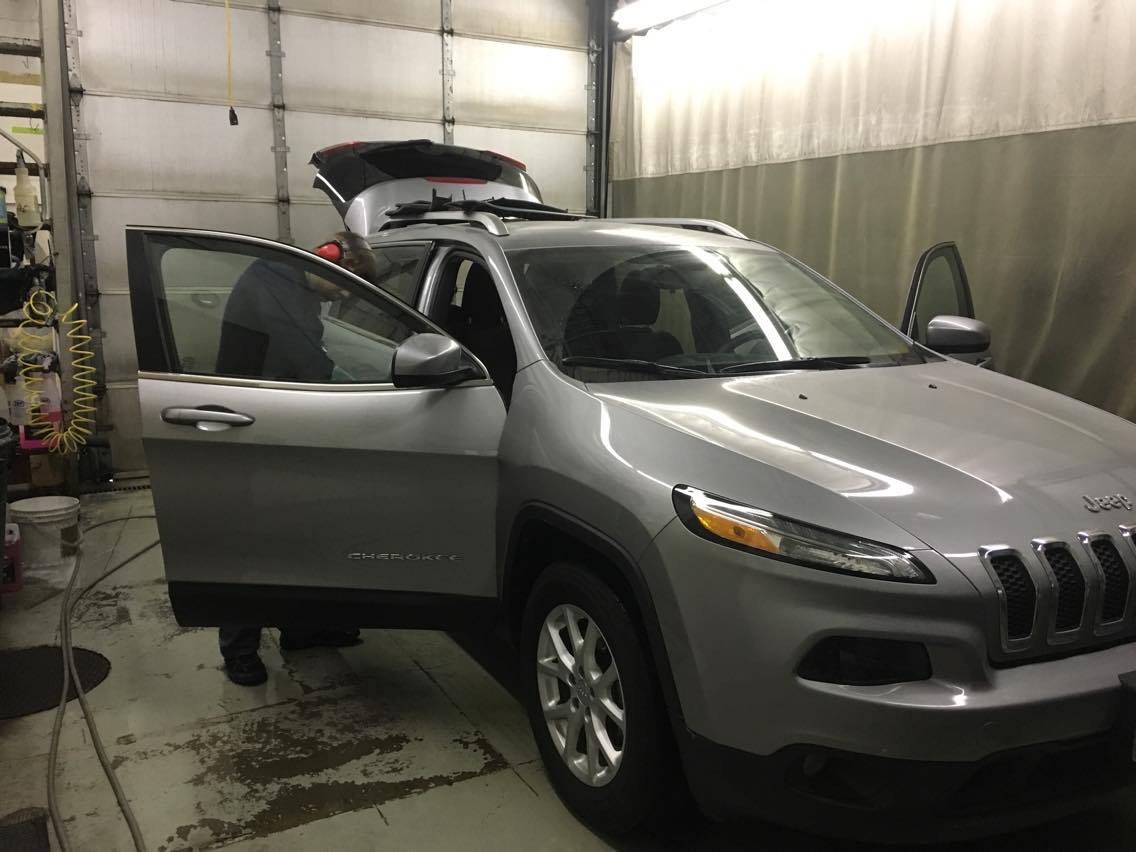
Winter driving isn’t much fun, unless you’re in an empty parking lot whipping donuts out, right? Nobody likes waking up in the morning and getting stuck on the side of the road because your commute is featuring the inch thick ice you were dreading the night before. Winter is a risky time of the year in general, but the risk only gets worse when you’re driving around with a foot of snow on the roof of your car.
Driving with snow piled on top of your car is dangerous for many reasons, the first being it could fall within your line of visibility. Snow melts as your vehicle heats up, but it also could slowly slide down the front of your vehicle, or could abruptly shift and block your sight when driving. This is an issue for obvious reasons. Windshield wipers are great, but they’re made for rain. The best practice is to eliminate the snow from your roof, windows and mirrors before you drive anywhere.
As snow melts and refreezes on the roof of your vehicle, it creates small pieces of ice, that accumulate and become larger hunks. Imagine driving down the highway and having a missile launch from the vehicle in front of you. This can cause cosmetic damage to the vehicle behind you, or could potentially cause an accident to the unsuspecting driver. Even if your ice chunk doesn’t hit another vehicle, it could cause road obstruction which is just as dangerous. We’ve all seen sheets of snow fall off of a semi as they haul their loads down the freeway, so next time you leave, think about clearing off as much as you can to save your fellow commuters.
In the state of Minnesota, it is not illegal to drive with snow piled upon your vehicle. You could, however, be pulled over for driving with an obstructed view. You may also be held liable if for any damage caused by snow falling off of your vehicle onto one behind you, as it violates the Unsecured Load Law in Minnesota. State Patrol advises drivers that if their vehicles are damaged due to ice or snow falling off of a vehicle in front of you to attempt to capture the license plate and contact the police department to seek reparations for the damages. You as a driver should be responsible and remove the snow from your vehicle prior to utilizing your vehicle after a snowfall.
When in doubt, clean that snow off! Nobody wants to be stuck in the cold taking care of this annoying task, but the reality is that you are doing your due diligence as a licensed driver by ensuring you are operating your vehicle safely. Using a soft bristle snow brush should get the job done, and allowing your vehicle to heat up will warm the ice and snow on top of your vehicle, allowing it to slough off with your brush easily. Give yourself the extra five minutes in the morning, save yourself the fine, and potentially save somebody else's life.
Showing posts with label Collision. Show all posts
Monday, February 17, 2020
Monday, January 20, 2020
It's Not Like The Old Days
Today in auto body, we are faced with more electronics and fluff than ever. Technology advancements have created safer modes of transportation, often edging into luxurious high-tech heaps of steel. This shows no signs of stopping, which has created a huge onslaught of misconceptions when it comes to a “typical bumper job.” There are no typical jobs anymore. Gone are the days of a one day turn around, dropping your car off in the morning for a little repair and picking it up that afternoon is no longer feasible.
Due to the intelligence we are faced with each passing year, we are required to update our repair process. The downside this has for our customers is that the length of repairs for even the smallest jobs has increased. After initial drop off, we need to perform a full disassembly of the vehicle. We remove all parts from the affected area, which often requires us to unplug sensors and other electronics. After the tear down is complete, we can create a complete blueprint of the damage to your vehicle and have a full assessment ready for you or your insurance. This process alone can take hours and is all dependent on the extent of the damage and the complexity of the systems in play.
Once we have your approval to begin repairs, we will assess mechanical requirements of the vehicle. This is when we note any sensors, cameras or other electronics that may require recalibration before being roadworthy. When we’ve established any items required, we get to the meat of the repair, the body work. We get the parts painted, straighten any frame damage and anything else required to get your vehicle back in shape.
When our technicians have completed the repair of parts, and all parts are painted, they reassemble the vehicle. We then put our information gathered during the blueprint for mechanical work to the test. We recalibrate any cameras, sensors, or other systems in the vehicle and scan for any possible code errors. This will tell us if any of the damage to your vehicle is still hiding within the electronic systems of your vehicle, which allows things like your airbags to deploy at the proper time. A step as important as this cannot be overlooked, and we attempt to do it in a quick efficient manner. Sometimes, computers get the best of us, too.
Our last step to a repair is to quality check your vehicle. We have staff check all aspects, things like the paint match, headlights, blinkers and windows are looked over now to ensure they’re in proper working condition. With each vehicle that comes through our doors, we take our time to ensure that all manufactured requirements are met. This means that we are combing over our work, the electric systems, paint match and so much more.
Our goal, as always, is to make sure your vehicle gets returned to you in the condition it was prior to your accident. Sometimes that requires us to take our time and can result in longer than anticipated repair times. We aim to make sure you are safe, and happy. Let us know if you have any questions about the repair process, or any time stipulations you may have, we do our best to accommodate all our customers!
Tuesday, December 17, 2019
My Insurance Quoted Me Less
In our business there’s a lot of moving factors. It’s not always possible to predict how long the parts will take to get to the shop, when your adjuster can make it out to look at the vehicle, or how much money your insurance company will feel justifies the cost of the repair. Sometimes, your insurance company will write an estimate that’s below the price of the estimate you receive from our shop, or whichever body shop quoted you for repair. This can be alarming, but there’s no reason to worry.
If you came to our shop and received a quote that was more costly than what your insurance offered, this likely due to a couple of different items. The first, is that your insurance company writes for what they can see. All initial estimates are written without the assumption that there are any damages above and beyond what can be seen by the eye. This is often not a full estimate, as there is likely damage behind what you can see and will require supplements or further billing to your insurance.
The second reason you may have a low estimate, is the type of parts your insurance company wrote your estimate for. Often times insurance companies will write estimates with used or recycled parts to save money. This can be negotiated, within reason. We are lucky to reside in a state that allows you to request your preferred parts be installed on your vehicle, depending on the year. Check your insurance policy and state laws to be sure.
If you came to our shop and received a quote that was more costly than what your insurance offered, this likely due to a couple of different items. The first, is that your insurance company writes for what they can see. All initial estimates are written without the assumption that there are any damages above and beyond what can be seen by the eye. This is often not a full estimate, as there is likely damage behind what you can see and will require supplements or further billing to your insurance.
Another reason your insurance estimate may be lower than you’ve been quoted, is due to the rates that they are hourly paying for repair. In the state of Minnesota, for repairs that are going through insurance we must start at their rates, but we will attempt to supplement your insurance to secure what we require hourly for the repairs. If this doesn’t work, there may be some out of pocket cost to you, but there will always be a conversation before we charge you for anything.
Occasionally your insurance estimate is less costly than ours could be due to the operations on your estimate. We aim to replace only what needs to be replaced, and to repair parts that are not damaged beyond repair. Often times, your initial estimate is written without the knowledge that parts are damaged beyond possibility of repair. In those cases, to protect and preserve the integrity of your vehicle, we will opt to replace instead of repair.
Our goal is to repair your vehicle to pre accident condition. This is something we do every day, we have the experience to work with your insurance and take an unwanted stressful experience and turn it into something easy. We aim to do so while also keeping repairs at a cost your insurance agrees to. If you’ve received an estimate that is different than ours in anyway, please bring the estimate into our shop so we can negotiate and find a way to accomplish your repair!
Wednesday, November 20, 2019
So, You Want To Buy A New Car?
One of the worst parts of our day at Oakdale Collision is having to tell someone their insurance totaled out their vehicle. Purchasing a new car can be a big stressful ordeal. It puts a lot on the line like your credit score, financials, and long-term happiness if you purchase the wrong thing. Sometimes, it’s hard to know what vehicle is the right vehicle, until it’s in front of you. We suggest thinking long and hard about what you need, and what you want out of your next vehicle.
The financial part is often the most worrisome step towards a new car. If your insurance is totaling out your current vehicle, make sure that you negotiate on your behalf, and that your payout is fair value. Before you set out to test drive your dream car, you need to identify what your budget is, and which type of sale you’d like to do, either private or through a dealership. You will need to identify how much you are willing to spend, and if you are planning on buying outright, or using a loan from either a bank or a dealership. If you go the loan route, decide how much money you are willing to allocate towards a monthly payment.
Paint a picture, albeit a broad one, of your ideal must haves and must nots in the next car you bring home. This can be little things, like auto start or heated seats, to the big items like being AWD or an included tow package. Create a list of your absolutes before you start searching online. This will help you cross potentials off the list, and preemptively thinking about what you absolutely need will allow you to quickly sort through the thousands of cars on the market. Then, once you know the type and trim package you desire, price check it! Look up what the industry norm is, and what people in your area are paying for the same type of vehicle. Keep that at the ready for when you visit the dealer or private party you intend to purchase though.
Absolutely always test drive the car. This is one of the most important parts of the car buying process. You need to know the depth of what you are getting yourself into, and test driving the car will allow you to experience what day to day life is going to be like. You’ll typically be driving the car, but how does the backseat feel? Can you properly use all the mirrors in the car and do you like your visibility? Is there road noise? How is the stereo? Do you feel too close to the steering wheel? Is there enough cargo space? Make sure your salesman has time to spare and take it for a thorough test. Drive on the freeway, find a hill, do a couple brake checks, cruise around and ensure you are positively in love with the vehicle before you entertain the idea of purchasing the vehicle. You also want to have a mechanic on call, for a checkup. It is always a good idea to make sure that the vehicle is mechanically sound.
A new car is an emotional and occasionally expensive venture, but you can save yourself a lot of stress by being proactive and getting your intention set before you start looking. By knowing what you want, you don’t have room for a salesman to upsell you, or to miss a great opportunity by overlooking an older model that has all your absolute must have items. Don’t let anybody push you into anything you aren’t interested in and know that you don’t have to buy anything you don’t love.
Thursday, September 12, 2019
Aftermarket or OEM Windshield?
One of the downsides to having a
vehicle you love and want to take care of is how often accidents happen. We’re
specifically thinking about how often rocks fly up from a vehicle in front of
you on the highway and put an unfortunate chip in your windshield. It happens,
but what do you do when you either have too many, they’re in your line of
sight, or if the whole thing is damaged beyond repair?
Insurance companies occasionally make demands that you may not agree with, but one of the best perks of living in Minnesota is a law that requires the vehicle owner’s explicit approval to replace OEM parts with Aftermarket ones. As an auto body repair facility, we don’t take a stance against or for either OEM or Aftermarket ones, but we will tell you the difference so you can make an informed decision as a consumer.
An Aftermarket windshield has many pros and cons just as an OEM one does. They meet the same requirements that OEM ones do for safety standards dictated by the Department of Transportation. This is often the more cost-effective option when replacing a windshield and are easily attainable. The windshield is a safety-related part, as it structurally supports your vehicle. Due to this, and the fact that aftermarket parts often differ in slight ways, you need to be entirely sure when selecting your glass. A very attentive vehicle owner may notice minimal differences in color, waves and the unfortunate situation of leaking, though this is the exception not a rule.
OEM windshields are identical to the windshield your vehicle came with when it was first manufactured. These windshields have their own list of pros and cons, the largest and possibly only con being the expense. A brand new windshield from your dealership will be much more expensive than an aftermarket option, and may still not be from the same manufacturer as your original piece of glass as most vehicle manufacturers sublet out their glass production.
It is important to be informed before making any decisions involving your vehicle, especially when it comes to a piece as important as the windshield. In the event your insurance company denies an OEM part and you feel strongly about it, most companies can find a way to supply you with the OEM part if you pay the difference in price. We can steer you in the right direction should you need it! If you have any questions about which type of part should be installed on your vehicle, or which company we recommend for windshield install/repair, you can always reach out to one of our employees. We are always here to help!
Insurance companies occasionally make demands that you may not agree with, but one of the best perks of living in Minnesota is a law that requires the vehicle owner’s explicit approval to replace OEM parts with Aftermarket ones. As an auto body repair facility, we don’t take a stance against or for either OEM or Aftermarket ones, but we will tell you the difference so you can make an informed decision as a consumer.
An Aftermarket windshield has many pros and cons just as an OEM one does. They meet the same requirements that OEM ones do for safety standards dictated by the Department of Transportation. This is often the more cost-effective option when replacing a windshield and are easily attainable. The windshield is a safety-related part, as it structurally supports your vehicle. Due to this, and the fact that aftermarket parts often differ in slight ways, you need to be entirely sure when selecting your glass. A very attentive vehicle owner may notice minimal differences in color, waves and the unfortunate situation of leaking, though this is the exception not a rule.
OEM windshields are identical to the windshield your vehicle came with when it was first manufactured. These windshields have their own list of pros and cons, the largest and possibly only con being the expense. A brand new windshield from your dealership will be much more expensive than an aftermarket option, and may still not be from the same manufacturer as your original piece of glass as most vehicle manufacturers sublet out their glass production.
It is important to be informed before making any decisions involving your vehicle, especially when it comes to a piece as important as the windshield. In the event your insurance company denies an OEM part and you feel strongly about it, most companies can find a way to supply you with the OEM part if you pay the difference in price. We can steer you in the right direction should you need it! If you have any questions about which type of part should be installed on your vehicle, or which company we recommend for windshield install/repair, you can always reach out to one of our employees. We are always here to help!
Tuesday, July 9, 2019
In A Collision? What Are Your Rights?
We’ve said it before, and we’ll say
it again, we are not your favorite group of people to see. We get it, who likes
getting in an auto accident? Nobody comes to Oakdale Collision, throws open the
doors and exclaims how excited they are about getting their car repaired. This
is an inconvenience to you, your family, and your wallet. We want to make sure
that before, during, and after this confusing time you know your rights as a
consumer.
You
have the right to pick where your car is repaired. This one baffles some
people, because your insurance sometimes seems to omit this detail. Your
insurance company has direct repair facilities it prefers to work with out of
ease and contractual agreements holding the shop to certain rates.
Occasionally, they will make recommendations to their clients where they should
take their vehicles. This by no means requires you to use said body shop,
however. You still have the option to get your vehicle repaired at whichever
shop you prefer, regardless of where your insurance mentions.
You
have the right to pick what kind of parts are used on your vehicle. This
one can be a bit less clear, but you have a say in what kind of parts are put
on your vehicle. There are typically three types of repair parts we could use;
OEM, Non-OEM, or recycled parts. An OEM part is an “Original Equipment
Manufacturer” part, meaning it was made by the manufacturer. A Non-OEM part is
any part considered aftermarket, or made by someone other than the
manufacturer, and a recycled part is exactly what the name suggests, recycled.
Some insurance companies have you waive this right when you sign their policy
statements, but for the most part you have the right to choose which type of
part goes on your vehicle.
You
have the right to a safely repaired vehicle. You can ask us any time about
our processes, what we are certified in, and how we fix your vehicle. After the
vehicle is finished, we will present you with an itemized copy of everything we
did to your car. Our goal is always return your vehicle back to pre-accident
condition, and that includes it being a safe vehicle to operate.
Our
goal at Oakdale Collision is to build a relationship with our customers based
on trust, and assurance that we are the very best at what we do. We know it’s
true, and hope that one day you can see it too! If you need an estimate, need a
repair, or just have some questions about what you should know as a customer,
call us today! We’d be happy to help.
Subscribe to:
Posts (Atom)